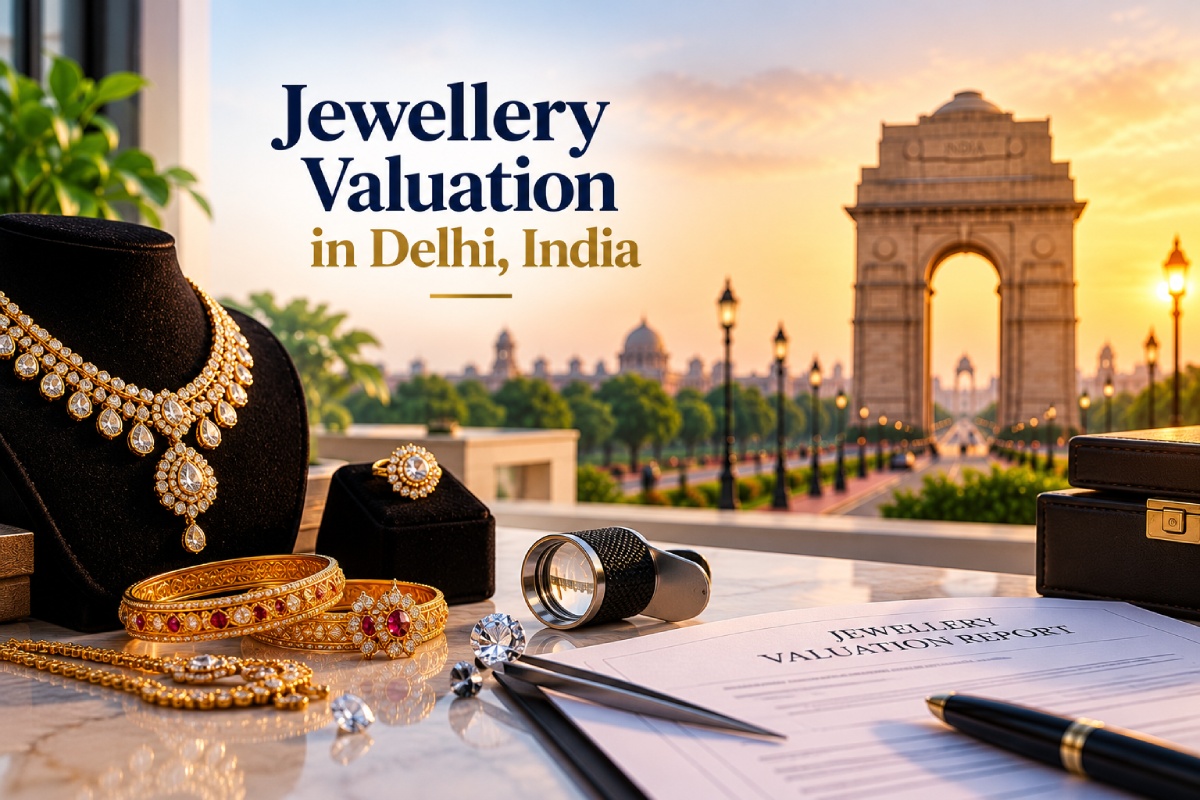
Jewellery Valuation In Delhi, India: Professional Gold, Diamond, Antique & Precious Jewellery Valuation
Jewellery Valuation in Delhi, India is important when individuals and families need to understand the estimated value of gold jewellery, diamond ornaments, precious stones, antique jewellery and inherited family collections. Jewellery may have financial, cultural and emotional significance, but its value cannot be established accurately by appearance alone.
Whether you are preparing a net worth statement, documenting assets for a visa application, arranging an inheritance settlement, reviewing insurance requirements or considering a sale, a professional jewellery valuation can help establish a documented assessment for the intended purpose.
Government Approved Valuer - Dr S. N. Bansal can discuss valuation requirements relating to jewellery and associated personal assets, subject to the assignment scope, specialist requirements and applicable professional standards. Where laboratory testing, gemstone identification or specialist certification is necessary, the appropriate qualified specialist should be involved.
What Is Jewellery Valuation?
Jewellery valuation is the assessment of the value of jewellery on a specified date for a defined purpose. Depending on the assignment, it may consider the jewellery's composition, purity, weight, gemstone characteristics, craftsmanship, condition, age and relevant market evidence.
The correct valuation basis matters. The value used for an insurance schedule may differ from an estimate of the amount obtainable in a resale transaction. A purchase invoice also does not automatically establish the jewellery's present market value.
Gold Jewellery Valuation in Delhi
Gold jewellery valuation commonly involves examining the item's weight, gold purity and relevant market rates. However, the gross weight of a piece may include gemstones, non-gold components, clasps or other materials that need separate consideration.
Important factors include:
• Gold purity or karatage, such as 18K, 22K or 24K, where applicable.
• Gross weight and the estimated weight of non-gold components.
• The relevant gold rate and valuation date.
• Workmanship, design and condition.
• Whether the jewellery has antique, collectible or other special significance.
• The purpose of valuation, including resale, insurance, net worth or financial documentation.
A professional assessment should clearly distinguish the relevant assumptions. The value of the gold content may not fully reflect the resale value of the complete jewellery item, and making charges paid at purchase may not be recovered in a later sale.
Diamond and Precious Stone Jewellery Valuation
Diamond and gemstone jewellery requires additional consideration beyond the metal's value. Relevant factors may include stone type, carat weight, colour, clarity, cut, treatment, origin where reliably established, mounting quality and supporting certificates.
The quality and identity of a gemstone should not be assumed solely from photographs or the seller's description. Depending on the purpose, an independent gemological report or testing by an appropriately qualified specialist may be necessary.
Antique and Heirloom Jewellery Valuation
Traditional Indian jewellery may have historical, artistic, cultural or family significance. Antique necklaces, temple jewellery, kundan, polki, meenakari and other traditional pieces may require an assessment that considers craftsmanship, age, authenticity, provenance, condition and demand among relevant buyers.
Age alone does not guarantee a higher value. An antique piece with reliable provenance and distinctive craftsmanship may have different market characteristics from a modern imitation or a piece that has undergone extensive alterations.
Where historical or collectible significance is material, the valuation should explain which factors are supported by evidence and which remain uncertain.
Jewellery Valuation for Net Worth Statements
Jewellery is often included in personal and family asset statements. A documented valuation may help present jewellery holdings as part of a wider financial picture that includes property, bank balances, investments and other assets.
The reporting approach should be suitable for the intended recipient. Jewellery owned jointly, inherited jewellery and items belonging to different family members should be described accurately. Avoid counting the same asset more than once in a consolidated net worth statement.
Jewellery Valuation for Visa and International Financial Documentation
Some visa, immigration or financial documentation processes may request information about an applicant's assets. If jewellery is included, confirm whether the receiving authority accepts jewellery valuation reports and whether it specifies a particular valuation basis or report format.
A valuation report estimates the value of the jewellery; it does not establish that the item is cash or guarantee that an immigration authority will accept it as proof of available funds.
For applicants living abroad who hold jewellery in India, the assignment requirements, access to the items and any necessary specialist examination should be discussed before work begins.
Jewellery Valuation for Inheritance and Family Settlement
Family jewellery can be important during inheritance, estate administration, partition or family settlement. A professional assessment may help the parties understand the estimated value of individual items or a collection.
The valuation date should match the relevant requirement. A present-day assessment may not be suitable where the legal or financial question concerns the value on an earlier date. Ownership, authenticity and any disputed claims should also be distinguished from the valuation itself.
Jewellery Valuation for Insurance
Jewellery insurance may require a documented value to support an insurance schedule or policy review. The insurer may prescribe the valuation basis, documentation, accepted professional and report validity period.
Replacement value, market value and potential resale proceeds are not necessarily the same. Always confirm which basis the insurer requires before commissioning the report.
How Is Jewellery Value Assessed?
The approach depends on the jewellery and intended purpose. It may involve:
• Assessment of metal type, purity and weight.
• Consideration of gemstone characteristics and specialist reports.
• Examination of design, craftsmanship, condition and alterations.
• Review of invoices, certificates and provenance records.
• Relevant market evidence and the valuation basis specified for the assignment.
Not every item requires the same level of testing. The scope should be agreed in advance, particularly for high-value gemstones or unusual antique pieces.
Documents and Information to Keep Ready
• Purchase invoices, where available.
• Gold purity certificates or hallmark information, where available.
• Diamond or gemstone certificates.
• Clear photographs and item descriptions.
• Earlier valuation reports, if relevant.
• Provenance or historical records for antique jewellery.
• The purpose of valuation and any prescribed format.
Missing purchase invoices do not automatically make an assessment impossible, but they may limit the evidence available to establish ownership, purchase history or authenticity.
Common Jewellery Valuation Mistakes
• Treating the purchase price as today's value.
• Applying the full gold rate to the jewellery's gross weight without considering stones and other components.
• Assuming all diamonds of the same carat weight have the same value.
• Overlooking the difference between insurance and resale valuation.
• Assuming antique age alone creates a premium.
• Using an old report without checking the current requirement.
Frequently Asked Questions
1. Can gold jewellery be valued in Delhi for net worth purposes?
A valuation assignment may be arranged according to the intended reporting requirements. Confirm the required valuation basis and accepted report format.
2. Is jewellery valuation the same as a gold-buying quote?
No. A buying quote may reflect a purchaser's commercial terms, while a valuation report assesses value for a defined purpose.
3. Can diamond jewellery be valued without a certificate?
The appropriate assessment depends on the item and purpose. Specialist examination or testing may be needed if the gemstone's characteristics cannot be reliably established from available information.
4. Is antique jewellery always worth more than new jewellery?
No. Value depends on authenticity, condition, craftsmanship, provenance and relevant market demand, among other factors.
5. Can jewellery be included in a visa asset statement?
That depends on the receiving authority's rules. Confirm whether jewellery is an accepted asset and which documentation is required.
Contact for Jewellery Valuation in Delhi, India
For jewellery valuation, gold jewellery valuation, antique jewellery assessment and asset valuation requirements, contact:
Government Approved Valuer - Dr S. N. Bansal
Phone: +91-9540009765, +91-9811039706
Share the type of jewellery, its location and the purpose of valuation to discuss the appropriate assessment and any specialist requirements.