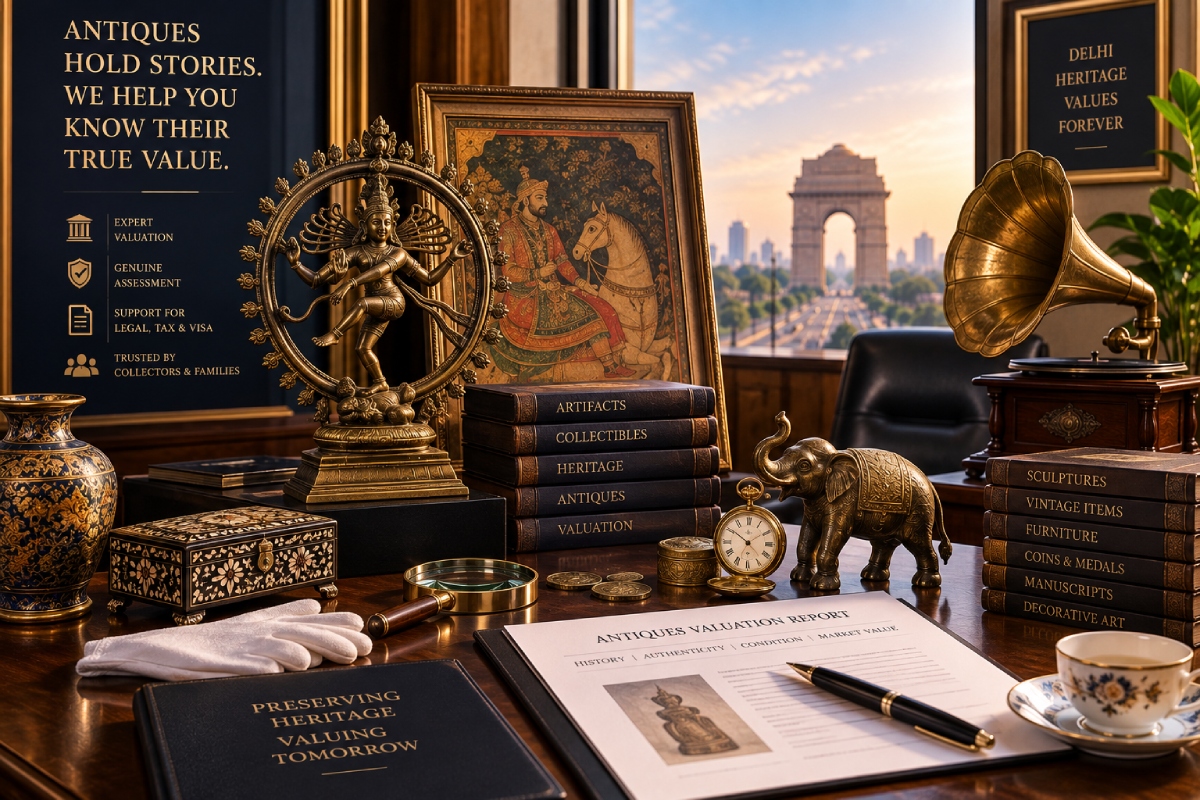
Antiques Valuation In Delhi: Professional Valuation Of Antique Furniture, Collectibles & Heritage Assets
elhi can be important for documenting the value of these assets for financial, family, legal, insurance, inheritance, and other appropriate purposes.
Government Approved Valuer - Dr S. N. Bansal provides professional valuation assistance for valuable assets, including antiques and collectible items, subject to the nature and scope of the assignment.
What Is Antiques Valuation?
Antiques valuation is the professional assessment of the value of an old, rare, collectible, historical, artistic, or culturally significant object.
Age is only one factor. The valuation may also consider:
• Authenticity
• Rarity
• Provenance
• Historical significance
• Craftsmanship
• Material
• Condition
• Originality
• Restoration
• Market demand
• Comparable transactions
• Current collector interest
A professional valuation therefore looks at the complete characteristics of the object rather than assigning value based only on how old it appears.
Why Antiques Valuation Is Important in Delhi
Many valuable antiques are privately owned and may not have a clearly established market price.
For example, a family may possess an antique wooden cabinet inherited from grandparents, an old clock purchased decades ago, a traditional sculpture, a collection of coins, or an old decorative object whose value has never been professionally documented.
When such assets become relevant to financial planning or documentation, an informed valuation can provide a structured basis for determining their value.
Types of Antiques That May Require Valuation
Depending on the assignment, antique valuation may involve different categories of objects.
• Antique furniture
• Heritage furniture
• Antique clocks and watches
• Traditional sculptures
• Decorative objects
• Coins and medals
• Collectibles
• Old manuscripts and documents
• Traditional handicrafts
• Antique paintings
• Decorative art
• Jewellery and historical ornaments
• Vintage collectibles
• Ceramics and selected objects
• Private antique collections
The appropriate valuation methodology depends on the characteristics and purpose of the assignment.
Key Factors That Determine Antique Value
1. Age
Age can contribute to the value of an antique, but being old does not automatically make an object valuable.
An older item that is common and poorly preserved may have limited market value, while a relatively less old but exceptionally rare and well-documented object may be considerably more valuable.
2. Authenticity
Authenticity is one of the most important considerations in antique valuation.
An object that is represented as an original historical piece should be evaluated using available documentation, physical characteristics, expert evidence, provenance, and other relevant information.
Replicas, reproductions, later restorations, and modified objects may have very different values from genuine originals.
3. Provenance
Provenance refers to the documented history and ownership of an item.
A strong provenance can provide useful evidence about where an antique originated, who owned it, and how it entered the current collection.
Documents such as old purchase records, family records, auction documents, gallery records, photographs, estate inventories, and other historical evidence can be useful.
4. Rarity
Scarcity can significantly influence collectible value.
An item that is rarely available in the market may attract stronger collector interest than a similar object that is commonly found.
5. Craftsmanship
Traditional craftsmanship, hand-carving, intricate detailing, specialised techniques, and artistic quality can influence the value of antique furniture, sculptures, decorative objects, and other heritage assets.
6. Material
The material used in an antique can also be relevant.
Depending on the object, materials may include different types of wood, metal, stone, ceramic, textile, glass, or other materials.
However, material value alone should not be confused with the overall market value of an antique.
7. Condition
Condition can have a substantial impact on value.
The assessment may consider:
• Cracks
• Missing components
• Structural damage
• Surface deterioration
• Repairs
• Replacement parts
• Restoration
• Alterations
• Original finish
An expertly restored antique may still have considerable value, but restoration history should be properly understood.
8. Historical and Cultural Significance
Some objects may have importance because of their association with a particular period, tradition, event, institution, family, region, or historical context.
Such factors may contribute to collector and market interest.
9. Current Market Demand
The market for antiques can change over time.
Collector preferences, interior design trends, cultural interest, auction activity, scarcity, and broader economic conditions can all influence demand.
Antique Valuation for Net Worth in Delhi
Antiques can form part of an individual's overall assets.
When preparing a Net Worth Valuation in Delhi, valuable antique furniture, collectibles, artwork, sculptures, and other assets may need to be considered alongside:
• Residential properties
• Commercial properties
• Land
• Gold and jewellery
• Shares
• Business interests
• Art collections
A professional valuation helps create a more structured assessment of the individual's overall asset position.
Antiques Valuation for Inheritance and Family Settlement
Inherited antiques can sometimes become a source of disagreement between family members because sentimental value and financial value are not necessarily the same.
A professional valuation can help establish a documented value when an estate or collection needs to be assessed.
It may be useful for:
• Distribution among legal heirs
• Family settlement
• Estate documentation
• Asset division
• Probate-related financial documentation, where applicable
• Settlement of disagreements regarding asset values
The valuation should be prepared according to the specific purpose and applicable requirements.
Antique Valuation for Insurance
Owners of valuable antique collections may require professional valuation documentation for insurance purposes.
A documented assessment can help establish the financial significance of items covered by an insurance arrangement.
The appropriate basis of value should be confirmed with the insurer because insurance valuation requirements can differ from market valuation requirements.
Antiques Valuation for Sale and Purchase
Before buying or selling an expensive antique, understanding its value can help the owner or prospective buyer make a more informed decision.
The asking price of an antique is not automatically its market value.
Professional analysis may consider available comparable sales, auction evidence, condition, provenance, rarity, authenticity, and current market interest.
Antique Valuation for Visa and Financial Documentation
Individuals whose financial position includes valuable antiques may sometimes need asset documentation for visa, immigration, residency, banking, or other financial purposes.
Where antiques are relevant to such documentation, a professional valuation can provide an appropriate supporting asset assessment.
The exact documentation requirements should always be checked against the relevant authority or application.
Antique Valuation for Legal and Financial Matters
Antiques may also become relevant in:
• Property and estate disputes
• Family disputes
• Inheritance matters
• Asset division
• Business or partnership matters
• Insurance claims
• Financial reporting
• Estate planning
Where valuation evidence is required for a legal or financial matter, the assignment should clearly identify the purpose, valuation date, asset, and appropriate basis of value.
Methods Used in Antiques Valuation
The methodology depends on the type of antique and the purpose of the valuation.
Market Comparison Approach
Comparable transactions can provide valuable evidence when similar antiques have recently been sold through recognised markets, dealers, auctions, or other credible channels.
The relevance of each comparable must be carefully considered because apparently similar antiques can differ substantially in authenticity, condition, provenance, craftsmanship, and rarity.
Auction Evidence
Auction results can provide useful information for certain categories of antiques and collectibles.
However, an auction result should not automatically be applied to another object without considering the differences between the two items.
Cost Considerations
For selected objects, replacement, restoration, craftsmanship, and material considerations may provide supporting information.
However, the cost of producing or restoring an item does not automatically establish its market value.
Income Considerations
For specialised assets that generate identifiable economic benefits, income-related considerations may have relevance, although this is not the normal approach for most privately owned antiques.
Documents Required for Antique Valuation
The following information can help make the valuation process more effective:
• Purchase invoices
• Old bills or receipts
• Previous valuation reports
• Auction records
• Gallery or dealer documentation
• Certificates or authenticity records
• Provenance information
• Family ownership records
• Historical photographs
• Exhibition records
• Restoration records
• Detailed photographs of the item
• Measurements and specifications
Not every document is required for every assignment. The information required depends on the nature of the asset and valuation purpose.
Common Mistakes in Antique Valuation
1. Assuming That Every Old Object Is Valuable
Age alone does not establish financial value.
2. Confusing Sentimental Value With Market Value
A family heirloom can have enormous emotional importance while having a different financial value in the open market.
3. Ignoring Authenticity
A reproduction or later copy can have a substantially different value from an authenticated original.
4. Ignoring Restoration
Major restoration, replacement parts, modifications, or repairs can influence the marketability and value of an antique.
5. Relying Only on Online Listings
Online asking prices may not represent completed transactions and should not automatically be treated as valuation evidence.
6. Using an Outdated Valuation
Antique markets can change, and a historical valuation may not represent the appropriate value for a new valuation date or purpose.
7. Ignoring Provenance
Ownership history and supporting documentation can be highly important for valuable antiques and collectibles.
Important Considerations for Heritage and Antique Assets
Some antiques, historical objects, cultural assets, manuscripts, or other heritage-related items may be subject to specific legal, ownership, conservation, import, export, or transfer requirements.
A valuation should not be interpreted as legal permission to buy, sell, transfer, export, or otherwise deal with an object.
Where such issues arise, appropriate legal or specialist advice should be obtained in addition to valuation services.
Professional Antiques Valuation in Delhi
When a valuable antique is part of an individual's financial assets, estate, collection, or family property, an informal estimate may not be sufficient.
Government Approved Valuer - Dr S. N. Bansal provides professional valuation assistance for appropriate asset valuation requirements in Delhi.
The broader valuation service portfolio includes:
• Antiques Valuation in Delhi
• Art Valuation in Delhi
• Painting Valuation in Delhi
• Property Valuation in Delhi
• Real Estate Valuation in Delhi
• Gold Valuation in Delhi
• Share Valuation in Delhi
• Net Worth Valuation in Delhi
• Visa Asset Valuation
• Capital Gain Valuation
Why Professional Valuation Matters
The value of an antique is rarely determined by one factor.
Age, authenticity, rarity, provenance, craftsmanship, condition, historical importance, market evidence, and current demand can all contribute to the final assessment.
For collectors, families, NRIs, estate holders, investors, businesses, and individuals in Delhi, professional valuation can help convert an uncertain asset estimate into properly documented valuation information suitable for the stated purpose.
Whether you have a single inherited antique or an extensive collection, obtaining a professional assessment can help you make better-informed financial and asset-management decisions.
Contact for Antiques Valuation in Delhi
For professional valuation assistance, contact Government Approved Valuer - Dr S. N. Bansal.
• +91-9540009765
• +91-9811039706
FAQs – Antiques Valuation in Delhi
1. What is antiques valuation?
Antiques valuation is the professional assessment of the financial value of an antique or collectible based on factors such as authenticity, age, rarity, provenance, condition, craftsmanship, historical importance, and market evidence.
2. Does the age of an antique determine its value?
No. Age is only one factor. Authenticity, rarity, condition, provenance, craftsmanship, historical relevance, and market demand can be equally or more important.
3. Can antique furniture be professionally valued?
Yes. Antique furniture can be assessed based on its age, design, craftsmanship, materials, originality, condition, provenance, rarity, and relevant market evidence.
4. Can inherited antiques be included in net worth?
Where appropriate, valuable inherited antiques may form part of an individual's assets and can be considered within a broader Net Worth Valuation in Delhi assignment.
5. Can antiques be valued for inheritance purposes?
Yes. Professional valuation can help establish documented values for inherited assets, estate distribution, family settlement, and other appropriate purposes.
6. Can I get antique valuation for insurance?
Yes. Antique valuation documentation may be useful for insurance purposes, subject to the valuation basis and requirements specified by the insurer.
7. What documents should I provide for antique valuation?
Purchase records, provenance documents, previous valuation reports, auction records, photographs, restoration details, family records, certificates, and other supporting information can be useful.
8. Can antique coins and collectibles be valued?
Depending on the assignment, coins, medals, collectibles, and similar assets can be assessed using appropriate valuation considerations, including authenticity, rarity, condition, historical relevance, and market evidence.
9. Is an online price enough to determine the value of an antique?
Generally, an online asking price should not automatically be treated as established market value. Credible transaction and comparable evidence should be evaluated in context.
10. Where can I get Antiques Valuation in Delhi?
You can contact Government Approved Valuer - Dr S. N. Bansal at +91-9540009765 or +91-9811039706 to discuss your antique or collectible and the purpose for which valuation is required.