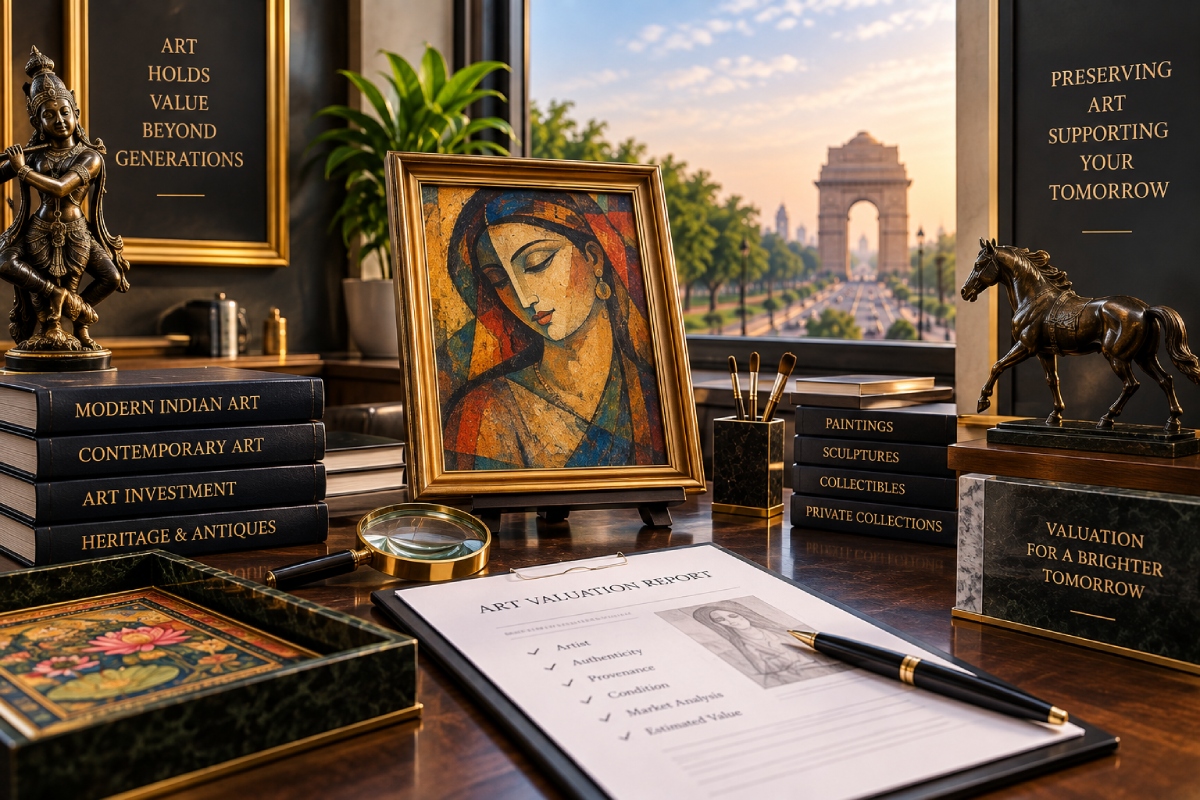
Art & Painting Valuation In Delhi: Professional Artwork Valuation For Net Worth, Visa, Tax, Inheritance & Sale
i, where established collectors, galleries, auction houses, corporate collections, heritage properties, and private art collections coexist, the value of an artwork can vary significantly depending on its artist, authenticity, provenance, condition, rarity, historical relevance, and current market demand.
Government Approved Valuer - Dr S. N. Bansal provides professional valuation services for paintings and artworks in Delhi, helping clients understand and document the financial value of their art assets for appropriate purposes.
What Is Art & Painting Valuation?
Art and painting valuation is the professional process of determining the appropriate value of an artwork based on relevant market, physical, historical, ownership, and financial factors.
A professional valuation is much more than estimating what a painting looks like it might sell for. The valuer considers available evidence and evaluates the characteristics that influence the market value of the specific artwork.
Depending on the purpose, the valuation may be required to establish an appropriate value as of a particular date.
Why Is Painting Valuation Important in Delhi?
Art collections can represent substantial wealth. However, unlike publicly traded shares or standard financial assets, paintings do not have a single continuously quoted market price.
Two paintings by the same artist can have very different values because of differences in:
• Size and medium
• Subject and composition
• Period in which the work was created
• Authenticity and documentation
• Provenance or ownership history
• Condition
• Exhibition and publication history
• Rarity
• Market demand for the artist
• Comparable auction or transaction evidence
This makes professional Art Valuation in Delhi particularly useful when the value needs to be documented rather than casually estimated.
Types of Artworks That Can Require Valuation
Professional artwork valuation can cover a wide range of assets, depending on the assignment.
• Original paintings
• Modern Indian art
• Contemporary Indian art
• Traditional and classical artwork
• Oil paintings
• Watercolour paintings
• Acrylic paintings
• Mixed-media artwork
• Drawings and works on paper
• Sculptures and selected three-dimensional artworks
• Antique or historically significant artwork
• Private and corporate art collections
The valuation approach depends on the type and characteristics of the specific artwork.
Factors That Determine the Value of a Painting
1. Artist Reputation
The reputation and market recognition of the artist can have a major impact on value. Established artists with documented market activity may have substantially different valuation benchmarks from emerging or lesser-known artists.
2. Authenticity
Authenticity is fundamental. A painting attributed to a particular artist must be evaluated with appropriate supporting documentation and available evidence.
Where certificates, gallery records, expert opinions, provenance documents, or other authentication material are available, these may become important inputs to the valuation.
3. Provenance
Provenance refers broadly to the documented ownership and history of an artwork.
A strong ownership history can increase confidence in an artwork, particularly when the work has previously been exhibited, published, acquired through a recognised gallery, or included in documented collections.
4. Condition
The physical condition of a painting can directly affect its marketability and value.
Factors may include:
• Tears or cracks
• Fading
• Moisture damage
• Surface deterioration
• Previous restoration
• Repainting
• Frame condition
• Structural issues
The valuer considers the available condition information while determining an appropriate value.
5. Medium, Size and Technique
Oil on canvas, watercolour, acrylic, mixed media, sculpture, and other forms can have different market characteristics.
The size, technique, composition, and visual importance of the work can also influence buyer demand.
6. Market Comparables
Comparable transactions and auction evidence can provide important indications of market behaviour.
However, online asking prices should not automatically be treated as equivalent to actual market transactions. A professional valuation considers the quality and relevance of available evidence.
7. Rarity and Demand
A rare work by an established artist may command a different value from a frequently available work.
Demand can also change over time because of collector preferences, exhibitions, market cycles, institutional recognition, and broader interest in a particular artist or category.
Art Valuation for Net Worth in Delhi
High-value artwork is often part of an individual's overall wealth.
For Net Worth Valuation in Delhi, paintings and other art assets may need to be identified and assigned an appropriate value along with other assets such as:
• Residential property
• Commercial property
• Land
• Gold and jewellery
• Shares
• Business interests
• Antiques
• Other valuable assets
A professionally prepared artwork valuation can help create a more structured picture of an individual's total assets.
Painting Valuation for Visa and Immigration Documentation
Individuals applying for visas, immigration, residency, or other international financial documentation may need to demonstrate their financial position.
Where artwork forms part of the applicant's declared assets, a professional valuation can help document its value for the relevant financial purpose.
Visa Asset Valuation should be prepared according to the documentation requirements of the relevant authority or application process. A valuation report itself does not guarantee visa approval, but accurate asset documentation can support a properly prepared financial file.
Art Valuation for Inheritance and Family Settlement
Art collections can become difficult to divide when several family members inherit valuable paintings.
For inheritance or family settlement purposes, professional valuation can help establish a reasonable value for individual artworks so that assets can be assessed more consistently.
This can be particularly useful when:
• Multiple heirs are involved
• The collection contains high-value paintings
• Family members disagree about value
• Assets need to be distributed between beneficiaries
• An estate requires an overall asset assessment
Art Valuation for Sale or Purchase
Before buying or selling an expensive painting, understanding its value can help the owner make a more informed decision.
A valuation does not necessarily represent the exact price that a particular buyer will pay. Actual sale prices can vary depending on negotiation, auction conditions, buyer interest, selling costs, timing, and the platform used.
Nevertheless, a professional valuation provides an evidence-based benchmark for decision-making.
Art Valuation for Insurance
Collectors may also require valuation documentation when arranging or reviewing insurance for valuable artwork.
A properly documented value can help insurers and owners understand the financial significance of the asset. The specific value required should always be aligned with the relevant insurance policy and insurer's requirements.
Art Valuation for Legal and Financial Matters
Artwork may become relevant in legal, financial, estate, partnership, matrimonial, or family disputes.
In such circumstances, the valuation should be based on appropriate evidence and the specific purpose for which the value is required.
Government Approved Valuer - Dr S. N. Bansal can assist where professional valuation documentation is required for appropriate financial, legal, asset, or reporting purposes, subject to the scope of the assignment.
Methods Used in Art & Painting Valuation
There is no single formula that works for every painting. The methodology depends on the artwork and valuation objective.
Market Comparison Approach
Comparable sales, auction results, and other relevant market evidence may be reviewed to understand the value range for similar artworks.
The closer the comparable is in terms of artist, period, medium, size, subject, condition, and market circumstances, the more useful it may be.
Market Evidence and Auction Analysis
For artists with established auction histories, historical transaction evidence can provide useful valuation indicators.
However, individual works can still vary considerably, so comparable evidence must be interpreted rather than copied mechanically.
Cost Considerations
For certain decorative or specialised artworks, material, craftsmanship, production, restoration, and replacement considerations may have relevance.
However, the cost of materials alone does not establish the market value of an original artwork.
Income-Based Considerations
In specific circumstances where artwork generates identifiable income or licensing-related economic benefits, income considerations may form part of the analysis.
This is generally more relevant to specialised assignments rather than ordinary private paintings.
Documents Required for Painting Valuation
The availability of supporting documents can significantly improve the valuation process.
Useful documents may include:
• Purchase invoice or bill
• Certificate of authenticity
• Provenance documents
• Gallery records
• Auction records
• Previous valuation reports
• Artist's certificate or documentation
• Exhibition records
• Publication references
• High-quality photographs
• Details of previous ownership
• Restoration records
• Insurance documentation
Not every assignment will require every document. Requirements depend on the artwork and purpose of valuation.
Common Mistakes in Art Valuation
1. Valuing a Painting Only by the Artist's Name
The artist's name is important, but it is not enough. Individual artwork characteristics can significantly affect value.
2. Using Internet Asking Prices
An online listing price is not necessarily an achieved transaction price. Professional analysis should distinguish between asking prices and credible market evidence.
3. Ignoring Authenticity
Without appropriate authentication or supporting evidence, valuation confidence can be affected.
4. Ignoring Condition
Restoration, damage, fading, cracking, or structural deterioration can materially influence marketability.
5. Relying on Very Old Valuation Reports
Art markets can change. A valuation prepared years ago may not represent the appropriate value for a current assignment or a different valuation date.
6. Treating Every Painting as an Investment
Not every artwork appreciates in value. Market demand can vary significantly between artists, styles, periods, and individual works.
Why Choose Government Approved Valuer - Dr S. N. Bansal?
When valuable artwork is being included in a financial or asset-related assessment, the valuation should be approached professionally rather than as a simple informal estimate.
Government Approved Valuer - Dr S. N. Bansal provides valuation support for clients requiring professional assessment and documentation of valuable assets.
The broader valuation service capability can also cover:
• Art Valuation in Delhi
• Painting Valuation in Delhi
• Professional Art Valuers in Delhi
• Net Worth Valuation in Delhi
• Property Valuation in Delhi
• Real Estate Valuation in Delhi
• Gold Valuation in Delhi
• Share Valuation in Delhi
• Antiques Valuation in Delhi
• Visa Asset Valuation
• Capital Gain Valuation
Professional Art Valuation in Delhi for Accurate Asset Documentation
Whether you own a single valuable painting or an extensive private collection, determining its financial value requires more than visual appreciation.
Artist reputation, authenticity, provenance, condition, rarity, market evidence, medium, size, historical significance, and current demand can all influence the final assessment.
For individuals, families, investors, NRIs, businesses, collectors, and estate holders in Delhi, a professionally prepared valuation can provide a structured basis for documenting artwork as part of their broader financial assets.
If you require Art & Painting Valuation in Delhi for net worth, visa documentation, inheritance, insurance, sale, purchase, financial reporting, or another appropriate purpose, professional valuation support can help ensure that the artwork is assessed systematically and documented appropriately.
Contact for Art & Painting Valuation in Delhi
For professional valuation assistance, contact Government Approved Valuer - Dr S. N. Bansal.
• +91-9540009765
• +91-9811039706
FAQs – Art & Painting Valuation in Delhi
1. What is art valuation?
Art valuation is the professional process of determining the appropriate value of a painting or artwork based on factors such as artist, authenticity, provenance, condition, rarity, market evidence, and valuation purpose.
2. How is the value of a painting determined?
The value may be determined by analysing comparable market transactions, auction evidence, artist reputation, artwork characteristics, provenance, condition, rarity, and current market demand.
3. Can I get painting valuation in Delhi for my personal collection?
Yes. Professional Painting Valuation in Delhi can be undertaken for personal collections, financial documentation, inheritance, insurance, sale, and other appropriate purposes.
4. Is an artist's name enough to determine the value of a painting?
No. The artist is an important factor, but the individual work's authenticity, provenance, medium, size, subject, condition, rarity, and market evidence also matter.
5. Can art be included in net worth valuation?
Yes, where appropriate. Valuable artwork may form part of an individual's assets and can be considered within a broader Net Worth Valuation in Delhi assignment.
6. Can painting valuation be used for visa purposes?
Artwork can potentially be included in financial or asset documentation where relevant. The valuation should match the specific requirements of the visa or immigration process.
7. Do I need an old purchase invoice for art valuation?
An invoice can be useful, but it is not necessarily the only relevant document. Provenance, authenticity certificates, gallery records, auction information, exhibition records, photographs, and other evidence may also be considered.
8. Can inherited paintings be valued?
Yes. Professional valuation can be useful for inherited artwork, estate distribution, family settlement, and other situations where the value of individual assets needs to be documented.
9. Can you value antique paintings and heritage artwork?
Depending on the nature and scope of the assignment, antique and historically significant artwork can be assessed using appropriate valuation considerations, documentation, and available market evidence.
10. How can I arrange Art Valuation in Delhi?
You can contact Government Approved Valuer - Dr S. N. Bansal at +91-9540009765 or +91-9811039706 to discuss your artwork and the purpose for which valuation documentation is required.